
BULL to Demonstrate Passive De-Orbit Device Onboard EnduroSat Satellite

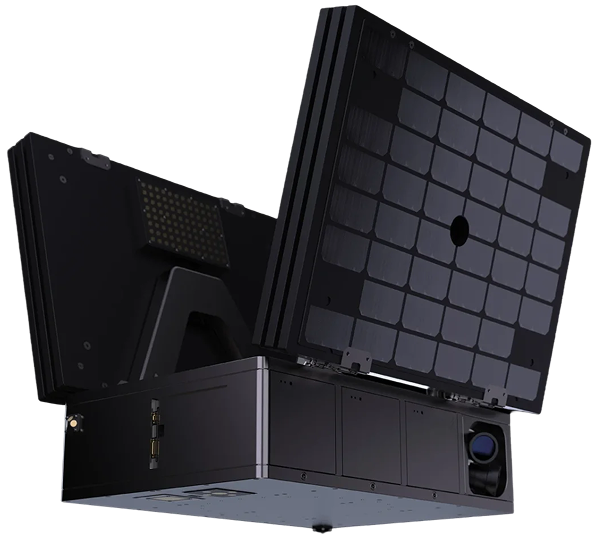
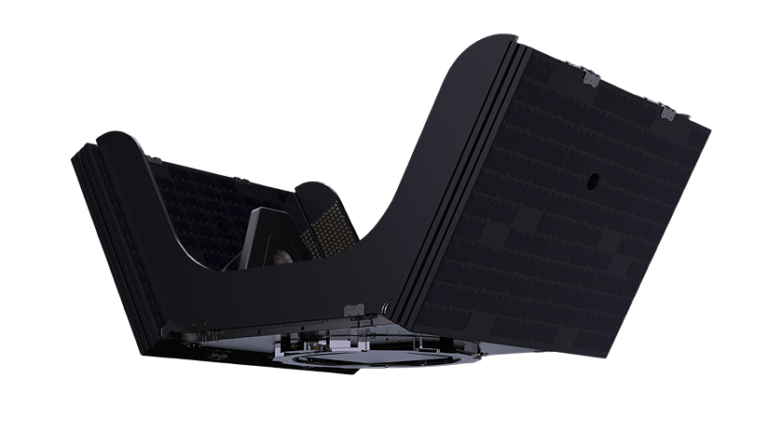
The EnduroSat satellite will carry BULL’s HORN post-mission disposal device to orbit in 2027, proving it deploys and de-orbits the satellite as designed under real space conditions – a step toward making clean end-of-life disposal a practical option for operators.
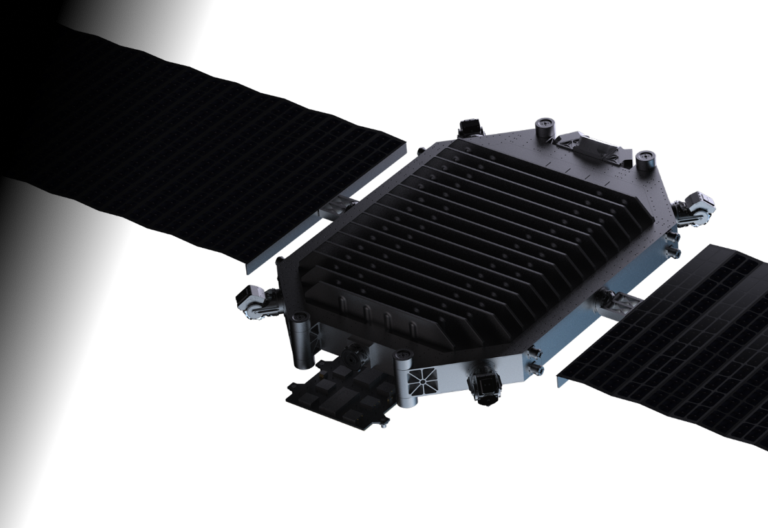
Sofia, Bulgaria / Utsunomiya, Japan, 16 July 2026 – BULL Co., Ltd., a Japanese developer of post-mission disposal (PMD) devices, and EnduroSat, a global space infrastructure builder, today announced a contract to fly an in-orbit demonstration of BULL’s PMD device HORN on a 16U EnduroSat satellite,launching in 2027 on SpaceX’s Transporter 22 mission. The demonstration will validate HORN under operational conditions and qualify BULL as a de-orbit supplier for EnduroSat missions that require it.
Objects are reaching orbit faster than they’re being removed, and most stay there for a long time. Operators, launch providers, and agencies increasingly need a reliable, low-mass way to deorbit a spacecraft once its mission ends. HORN answers that need with a deployable membrane that uses atmospheric drag to shorten a satellite’s post-mission orbital lifetime – no propulsion or consumables required. As a passive system, it adds disposal capability without the mass, cost, or failure modes of active propulsion.
Under the contract, HORN will be integrated onto a 16U EnduroSat satellite and demonstrated in orbit in 2027, exposing it to real thermal, vacuum, and operational conditions rather than ground tests alone. Flying on an EnduroSat satellite – drawn from a fleet with in-orbit heritage of 100+ satellites – gives the demonstration the credibility operators and regulators need before committing to a disposal method. For BULL, it extends HORN beyond its launch-vehicle work with Arianespace (Ariane 6) and Avio (Vega C) to the satellite itself, where most future debris originates.
A successful demonstration makes HORN a flight-proven option in EnduroSat’s supply chain: BULL joins EnduroSat’s trusted-vendor list, giving operators a verified choice for passive de-orbit. The two companies will continue collaborating after the flight, with EnduroSat’s platform and integration feedback helping BULL refine future HORN variants for tighter compatibility. The result: a faster, lower-risk path to compliant end-of-life disposal.
Most of tomorrow’s debris will come from satellites that reach orbit without a reliable way to leave it. HORN is our answer – a passive, propellant-free membrane that brings a spacecraft down once its mission ends. Demonstrating it on an operating EnduroSat satellite, under real operational conditions, is the milestone that matters: it proves HORN deploys and de-orbits as designed, at the layer where most debris begins. This demonstration turns clean end-of-life from an aspiration into a qualified option operators can choose.
Yasuhito Uto
Founder & CEO, BULL Co.
We are proud to support BULL’s innovation in sustainable orbital operations. By flying HORN, we are enabling BULL’s team to demonstrate passive, low-mass disposal capability for their future customers.
Raycho Raychev
Founder and CEO, EnduroSat
About BULL Co.
With the vision of making the interplanetary travel “the norm” on and off the Earth, BULL is a start-up aiming to provide inexpensive and concise services in space by utilizing “(Re –) Entry” technology into planets. Based in Utsunomiya City, Tochigi Prefecture, the company promotes industry-academia-government collaboration.
By developing a device to prevent the generation of space debris and advancing the development of microgravity experimental satellites and devices for orbital utilization, BULL contributes to the SDG s(Sustainable Development Goals) in the new era of space development.
About EnduroSat
EnduroSat is a space infrastructure builder that engineers, manufactures, and operates high-performance satellites, making space universally accessible for commercial and institutional customers across the globe. EnduroSat delivers end-to-end satellite missions—from mission design and payload integration to launch and in-orbit operations—through a fixed-cost, constellation-as-a-service model.